In Natural Gas processing, selecting the right amine solvent is critical for efficient removal of H2S and CO2. Two of the most widely used options are MEA and DEA—each with distinct process characteristics and operational trade-offs.
Product Fearures:
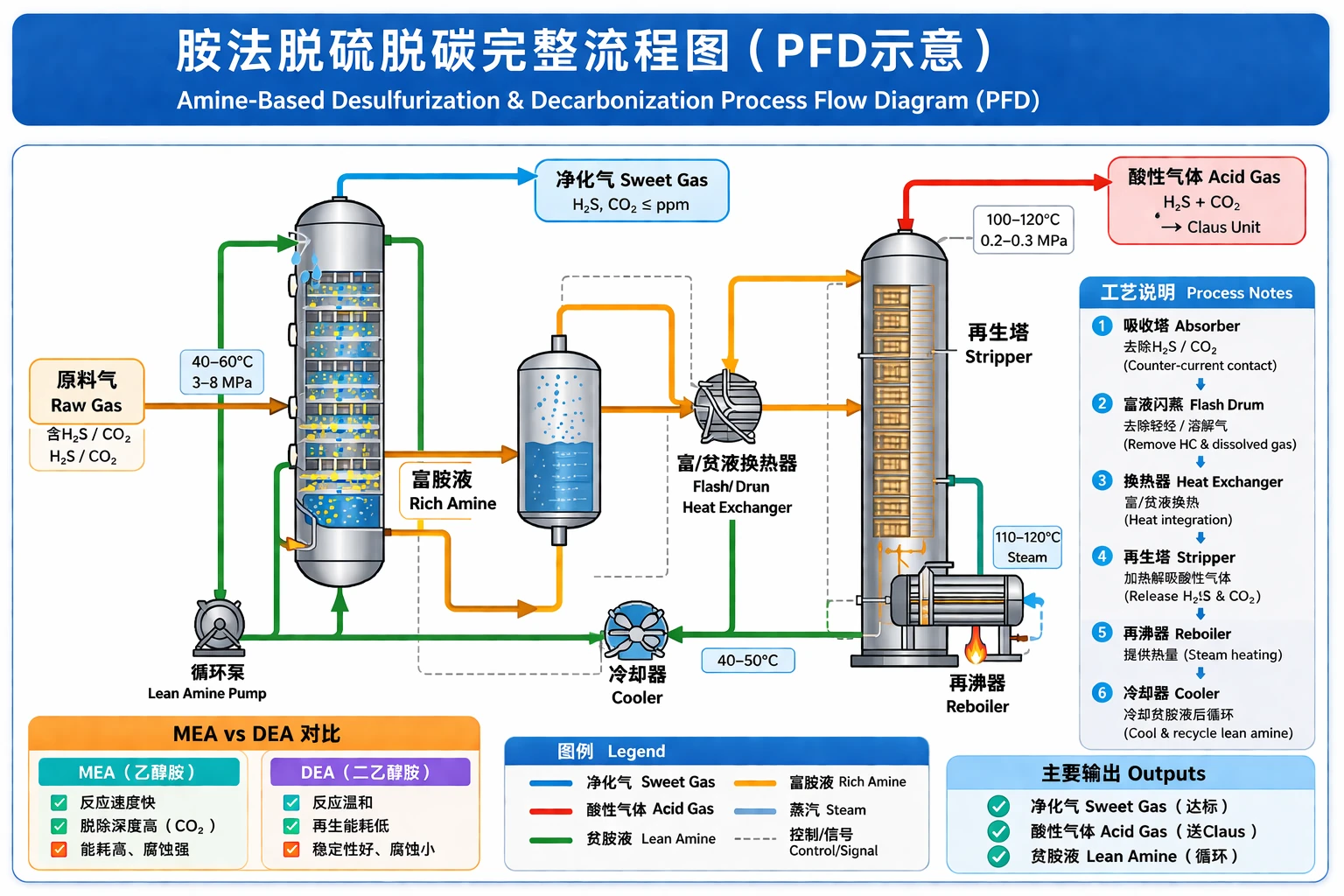
l Fast reaction kinetics;
l High CO₂ removal efficiency (deep decarbonization);
l Higher energy demand for regeneration;
l More corrosive, requiring careful materials and inhibitors.
l Moderate reaction rate;
l Lower regeneration energy consumption;
l More stable with reduced corrosion issues;
l Better suited for large-scale and high-pressure systems.
Process Insight:
Both operate within a classic absorption–regeneration loop: sour gas enters the absorber, acid gases are chemically absorbed by the amine solution, and the rich amine is then regenerated in a stripper using heat. The recovered acid gas is typically routed to sulfur recovery (Claus process), while lean amine is recycled.
Engineering Takeaway:
l Choose MEA for deep CO₂ removal when purity specs are stringent;
l Choose DEA for energy efficiency and long-term operational stability.